- Labony Kitchen Offline
- Site Admin
- Posts: 13
- Joined: Wed Apr 08, 2026 12:20 pm
Safety Warning Issued After Nine Water-Related Deaths During Heatwave
Post by Labony Kitchen »People are being urged to take extra care around open water following a series of fatal incidents during the recent heatwave.
The Royal Life Saving Society (RLSS) issued a warning after multiple drownings, most involving children and teenagers, reminding the public that warmer weather often leads to a rise in accidental deaths in water.
At least seven young people lost their lives, including 12-year-old Junior Slater, who died after getting into difficulty in the River Ribble in Lancashire on Tuesday. A man in his 60s and a woman in her 70s also died in separate incidents.
The RLSS warned that, despite high air temperatures, rivers, lakes and seas remain dangerously cold. Sudden immersion can trigger cold-water shock, making it difficult to swim or escape safely.
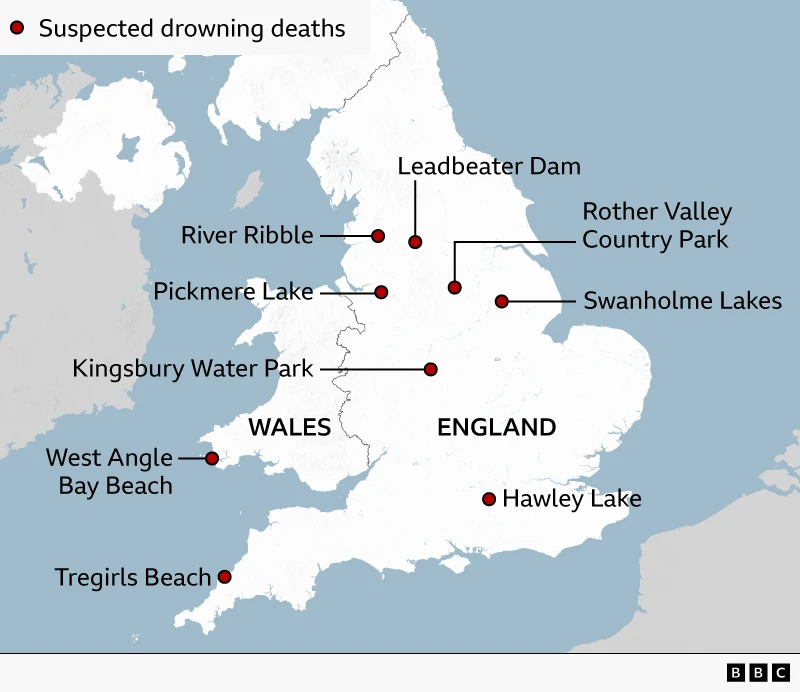
Among the incidents:
Declan Sawyer, 15, died after getting into difficulty at Swanholme Lakes in Lincoln on Sunday afternoon.
A 72-year-old woman was pulled from the water at West Angle Bay beach in Pembrokeshire, Wales, on the same day.
On Bank Holiday Monday, 13-year-old Reco Puttock died after being rescued from Leadbeater Dam in Halifax, West Yorkshire.
The body of a teenage girl, believed to be 16-year-old Lillianna Tomlinson, was recovered from Kingsbury Water Park in Warwickshire.
A teenage boy was also found dead in a lake at Rother Valley Country Park in South Yorkshire.
A man in his 60s died at Tregirls Beach near Padstow, Cornwall, after attempting to help two relatives in difficulty in the sea.
On Wednesday, police recovered the body of a 17-year-old boy from Pickmere Lake in Cheshire.
The same day, another teenage boy was found at Hawley Lake near Farnborough after reportedly going missing while swimming.
Water safety organisations are advising people to swim only in supervised areas with lifeguards and to enter the water gradually to reduce the risk of cold-water shock.
Cold-water shock is the body’s involuntary response to sudden exposure to cold water. It can cause rapid breathing, increased heart rate and panic, making it harder to stay afloat or swim.
The Royal National Lifeboat Institution (RNLI) says water below 15C is considered cold. UK and Ireland sea temperatures average around 12C, while rivers can be even colder during summer.
Cool Fan or Air Con
Speaking to BBC Breakfast, Jim Bridge from the Water Safety Partnership encouraged anyone struggling in water to “float to live” by lying on their back, keeping their ears submerged, and using their arms and legs gently to stay afloat until breathing returns to normal.
The warnings come after the UK recorded its hottest May day on record, with temperatures reaching 35.1C at Kew Gardens in London on Tuesday. Parts of south-east England exceeded 34C for two consecutive days, while many weather stations across England and Wales recorded new May temperature highs.
The Met Office defines a heatwave as temperatures reaching a set threshold for at least three consecutive days. Cooler conditions are expected to bring some relief following the record-breaking heat.
The Royal Life Saving Society (RLSS) issued a warning after multiple drownings, most involving children and teenagers, reminding the public that warmer weather often leads to a rise in accidental deaths in water.
At least seven young people lost their lives, including 12-year-old Junior Slater, who died after getting into difficulty in the River Ribble in Lancashire on Tuesday. A man in his 60s and a woman in her 70s also died in separate incidents.
The RLSS warned that, despite high air temperatures, rivers, lakes and seas remain dangerously cold. Sudden immersion can trigger cold-water shock, making it difficult to swim or escape safely.
Among the incidents:
Declan Sawyer, 15, died after getting into difficulty at Swanholme Lakes in Lincoln on Sunday afternoon.
A 72-year-old woman was pulled from the water at West Angle Bay beach in Pembrokeshire, Wales, on the same day.
On Bank Holiday Monday, 13-year-old Reco Puttock died after being rescued from Leadbeater Dam in Halifax, West Yorkshire.
The body of a teenage girl, believed to be 16-year-old Lillianna Tomlinson, was recovered from Kingsbury Water Park in Warwickshire.
A teenage boy was also found dead in a lake at Rother Valley Country Park in South Yorkshire.
A man in his 60s died at Tregirls Beach near Padstow, Cornwall, after attempting to help two relatives in difficulty in the sea.
On Wednesday, police recovered the body of a 17-year-old boy from Pickmere Lake in Cheshire.
The same day, another teenage boy was found at Hawley Lake near Farnborough after reportedly going missing while swimming.
Water safety organisations are advising people to swim only in supervised areas with lifeguards and to enter the water gradually to reduce the risk of cold-water shock.
Cold-water shock is the body’s involuntary response to sudden exposure to cold water. It can cause rapid breathing, increased heart rate and panic, making it harder to stay afloat or swim.
The Royal National Lifeboat Institution (RNLI) says water below 15C is considered cold. UK and Ireland sea temperatures average around 12C, while rivers can be even colder during summer.
Cool Fan or Air Con
Speaking to BBC Breakfast, Jim Bridge from the Water Safety Partnership encouraged anyone struggling in water to “float to live” by lying on their back, keeping their ears submerged, and using their arms and legs gently to stay afloat until breathing returns to normal.
The warnings come after the UK recorded its hottest May day on record, with temperatures reaching 35.1C at Kew Gardens in London on Tuesday. Parts of south-east England exceeded 34C for two consecutive days, while many weather stations across England and Wales recorded new May temperature highs.
The Met Office defines a heatwave as temperatures reaching a set threshold for at least three consecutive days. Cooler conditions are expected to bring some relief following the record-breaking heat.